Harris Chain Bass Fishing Overview
The
beautiful and scenic Harris Chain Lakes are located in Central
Florida's Lake County about 40 minutes northwest of Orlando. The
eight interconnected lakes of the Harris Chain cover approximately
50,000 acres of water. Lake Apopka in Orange County covers
slightly over 30,000 acres. Harris Chain lakes are extremely
fertile and contain a wide variety of water clarities and colors.
The primary cover is Kissimmee grass, eel grass, pepper grass, lily
pads, reeds and cattails. The clearest water is in the
canals and springs areas of Yalaha on the South side of Lake Harris.
The darkest water is on the open lake, especially in the summer
months when algae blooms are most common. Algae blooms are
only a few inches thick with the underlying water color being a
light green. In recent years, the water clarity of the lakes has
greatly improved. Florida's high water and drought cycles are about
5 years in length. Flushing in high water and wind action
during drought sweeps the shoreline and allows native grasses to
re-grow. Hydrilla is now being allowed to grow in some areas which
is significantly aiding in the improvement of water clarity. It is
not clear if this is a mind-shift on the part of County officials or
a result of reduced budgets for chemicals. What is clear is
that the water quality has significantly improved and our bass
fishing has been positively effected.
The depth of the lakes
is about 10-12 feet on average with no reefs or open lake obstacles
to impede navigation. Big Lake Harris has the deepest water at
about 30 feet along the south shoreline. Lake Griffin is the
shallowest and has the least amount of development. Water depth in
the numerous canals surrounding the lake varies considerably.
It is not uncommon to see dry land in many of these canals during
extended droughts. The deepest Harris Chain canals are in Astatula
within the development of Lake Harris Shores.
Nine of the Harris
Chain lakes are interconnected via navigable canals and waterways.
Lake Yale is landlocked and Lake Apopka is connected by the Apopka/Beauclair
canal and lock (now closed). The center Lake in the Chain is Lake
Eustis. Lake Griffin has two locks, one on Haines Creek leading into
Lake Eustis and the other at the top of the lake at Moss Bluff.
Through the Moss Bluff lock you can travel by boat past Silver
Springs to Jacksonville where the St. Johns River meets the
Atlantic. Lake Dora, Beauclair and Carlton are the east Harris Chain
lakes and can be accessed from Lake Eustis via the picturesque Dora
Canal. Lake Harris and Lake Eustis are connected by the
wide Dead River waterway.
There are a number of
boater friendly restaurants on the Harris Chain. The Hurricane
Dockside Grill is a popular waterfront destination on the Dead
River. The downtown Eustis City docks provide boater access to
the downtown area just a short walk away. The popular Al's
Landing Restaurant and the Tavares Sea Plane base are located on
Lake Dora. Mount Dora has a public dock at Gilbert Park, with
historic downtown Mount Dora nearby. The Lake Harris Hideaway
Restaurant has gone through a number of name changes through the
years, but remains very popular with boaters and weekend biker
cruisers.
The Collapse of the Bass Fishery
Thirty years ago the Harris Chain
hosted numerous national bass tournaments including the B.A.S.S.
Megabucks. Around 1990, B.A.S.S. held a disastrous
national tournament on the Chain, setting a record for the lowest
average catch rate of any national tournament. This tournament
created ripples throughout bass fishing circles, eventually
culminating in the publishing of an article in the December 1992
issue of "Bassmaster Magazine" detailing many of the problems.
The causes for the decline were reported as; over enthusiastic weed
spraying, locks, pollution from Lake Apopka, mysterious bass viruses
and a dozen other causes. Whatever the cause, it was clear
that bass fishing in the Harris Chain had significantly declined
from previous levels.
A
major contributor to the decline in Harris Chain bass fishing was
the over application of herbicides and the introduction of
grass carp into the lakes in the late eighties. By 1987, hydrilla
had become a major problem in the chain. State and County
water managers viewed this development as an alien attack and made
the decision to totally eradicate hydrilla from the chain. A new
chemical tool, Sonar (fluridone) had just been development that
promised to make short work of this invasive plant.
Unfortunately, little was know about the long term effects of Sonar
and proper treatment levels had yet to be worked out.
Empowered by the Florida Department of Environmental Protection's
edict to "use any and all methods to eradicate non-native evasive
plants", County employees managed to kill off all the hydrilla
between 1987 and 1988. Unfortunately, these massive treatments
also had a devastating effect on native plant species as well.
Huge fields of pads, pepper and eel grass turned into fields of
muddy lifeless muck and sank to the bottom of the lakes. By 1990
when the infamous B.A.S.S. tournament was held, the lakes were
almost totally void of cover and traditional bass spawning areas
were covered in dead plants and debris. The few bass that were
caught were caught in the back of the canals where chemicals failed
to reach.
The Harris Chain
Recovery
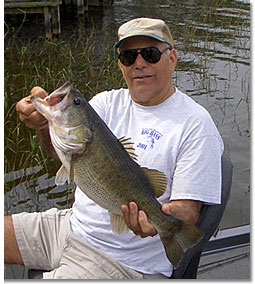
Thirty years later, the lakes have
largely recovered from the chemical purge. Most of the grass carp
have died or have been removed and our great bass fishing has
returned. Much of the credit for the recovery has to be given
to St. John's Water Water Management who made the decision to let
the lakes seek their own levels instead of artificially holding the
lake water levels high. Florida's 5 year cycles of high and
low water allows lake shorelines to be naturally cleaned and dried
out during droughts and the bass return to newly invigorated
spawning areas when the water returns. Recently, a significant
attitude change seems to be taking place as water managers attempt
to manage hydrilla instead of concentrating their efforts on
eradicating it entirely.
Other reasons for the
recovery of the Harris Chain bass fishery can be identified. In the
early nineties, Florida implemented a five bass 14" daily limit that
went a long way to improve the overall success of Florida bass
anglers. Catch and release caught on with anglers and
guides. During droughts, game officials and local residents
replanted acres of beneficial reeds in large areas of the Chain.
A new water filtering facility located at the mouth of Lake
Beauclair is showing great promise in cleaning the water flowing
into the Chain from Lake Apopka. The future of the Harris
Chain bass fishery is bright and baring the repeat of past mistakes,
should continue to improve. The truth is, the Harris Chain has
the potential to be one of the greatest bass fisheries in the
country. The Harris Chain is one of Florida's most valuable
assets. Billions of dollars revolve around fishing, boating and
lakefront property ownership. Only time will tell if County
water managers learn from the experience of the eighties or return
to the solutions of quick fixes.
Lake Apopka
Lake Apopka is a
work in progress. Bass fishing has improved and we recently
added a new page devoted to fishing this lake. To view the current
status of Lake Apopka bass fishing, click here.
If you have any
questions or comments about the Harris Chain or any Lake County
Florida waterway, please feel free to
contact us.
|